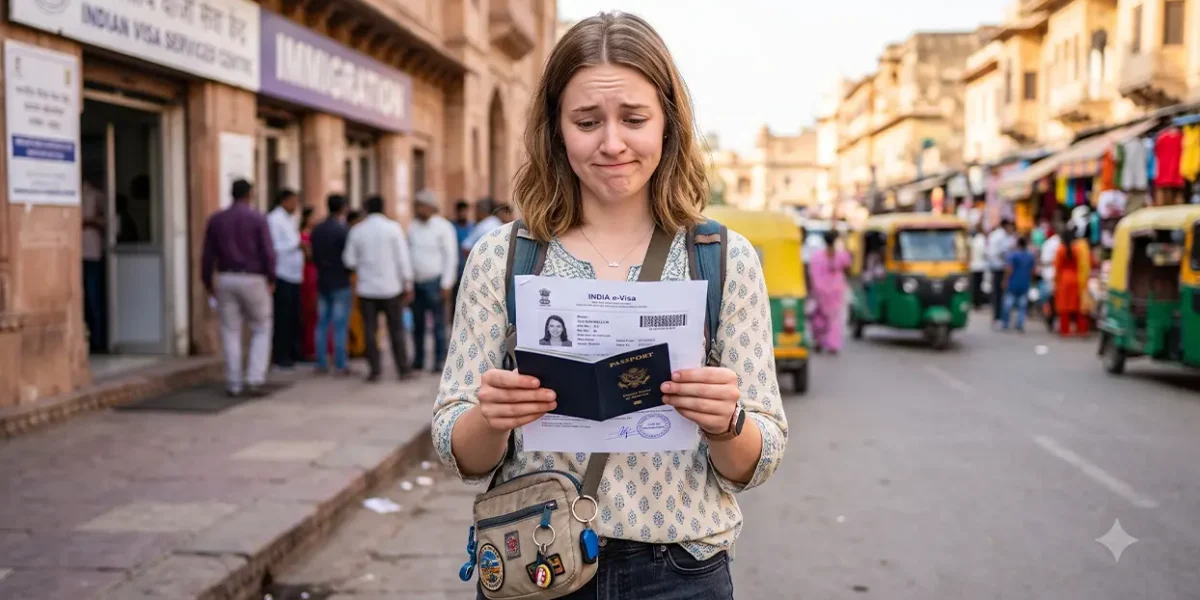
Planning a trip to Sikkim and confused about permits? You are not alone. Most travellers get stuck on the same questions. Do I need a permit at all? What is the difference between RAP and PAP? Why was my Aadhaar card rejected? Can I visit Nathula or Gurudongmar Lake?
This guide answers all of it in plain language. Every fact here is checked against official government sources, mainly the Tourism and Civil Aviation Department, Government of Sikkim, and the Government of India’s e-FRRO portal. Where the rules are still changing, we tell you that too, so you are never caught off guard at a checkpost.
Quick Answer: Do You Need a Permit?
| Traveller Type | Entering Sikkim | Visiting Border/High-Altitude Areas |
|---|---|---|
| Indian citizen | No permit needed | Needs a Protected Area Permit (PAP) |
| Foreign national (incl. OCI) | Needs a Restricted Area Permit (RAP) | Needs both RAP and PAP |
| Bhutanese citizen | No permit, only entry/exit record | Follows same protected area rules as other foreign nationals |
| Nepalese citizen | No permit, only proof of citizenship | Follows same protected area rules as other foreign nationals |
In short: Indians can walk into Gangtok, Pelling or Namchi with nothing more than an ID card. The moment anyone, Indian or foreign, wants to go somewhere near an international border (Nathula, Gurudongmar, Zuluk, Yumthang) or into a sensitive forest zone (Dzongri, Singalila, Dzongu), a separate Protected Area Permit comes into play.
Heading to Yuksom for a trek? Most of this guide reads like it is written for Gangtok and North Sikkim, because that is where the busiest checkposts and the most famous restricted spots are. But the exact same RAP and PAP system governs West Sikkim too. If your trip involves the Dzongri Trek, the Dzongri-Goechala Trek, the Singalila Ridge Trek, or a round trek like Kasturi Orar (Odar), all of it falls inside the Khangchendzonga National Park permit zone, and every rule on this page, RAP for foreigners, PAP for everyone, the Aadhaar rejection, the group-of-two rule for foreign trekkers, applies to you just as much as it applies to someone going to Tsomgo Lake. The only real difference is which office you route your paperwork through. That is covered in detail further down.
Why Does Sikkim Even Need Permits?
Sikkim sits in a genuinely unusual spot on the map. It borders the Tibet Autonomous Region of China to the north and northeast, Bhutan to the southeast, and Nepal to the west, with West Bengal as its only Indian neighbour to the south. Because of this, the entire state falls under India’s Restricted Area Regime, a framework built on the Foreigners (Protected Areas) Order of 1958 and the Foreigners Act of 1946.
This is not bureaucracy for its own sake. Large parts of Sikkim sit close to the Line of Actual Control (LAC) with China, and the state hosts active military infrastructure. The permit system lets the state police, army and border checkposts track who is moving where, which is standard practice for any international frontier zone worldwide.
The same dramatic geography that creates this sensitivity also makes Sikkim spectacular. The state covers just 7,096 square kilometres but rises from sub-tropical valleys to the cold desert conditions of the high Himalaya faster than almost anywhere else in India. The Khangchendzonga National Park alone covers about 35% of the state, and Kangchenjunga, the third highest mountain on Earth, sits right on its border with Nepal.
Part 1: The Restricted Area Permit (RAP)
What Is the RAP?
The Restricted Area Permit, still commonly called the Inner Line Permit or ILP, is the basic document every foreign national needs to enter Sikkim at all. It is separate from, and in addition to, your regular Indian visa. Without it, no foreign national can legally cross into the state.
Who needs it: Every foreign tourist, including Overseas Citizens of India (OCI) cardholders. For permit purposes, OCI holders are treated exactly like foreign nationals, not like Indian citizens.
Who is exempt:
- Bhutanese citizens do not need a RAP at all. They only need to record their entry and exit at a designated Foreigners Registration Office (FRO) or checkpost.
- Nepalese citizens also skip the RAP. They just need to show valid proof of Nepalese citizenship at the entry point.
- Bangladeshi nationals were once restricted, but that restriction was lifted on 22 November 2018. Bangladeshi citizens still need a standard RAP like other foreign nationals, but no longer face the extra scrutiny described below.
The PRC Category: Extra Scrutiny for Some Nationalities
A small group of countries falls under what the government calls the Prior Reference Category (PRC). According to the Tourism and Civil Aviation Department’s current guidelines, this list includes Pakistan, Nigeria, China (including Hong Kong and Taiwan), and Myanmar.
If you hold a passport from, or were born in, one of these places, you cannot get a RAP on arrival or through a regular office. You must first get prior written approval from the Ministry of Home Affairs (MHA) and the Ministry of External Affairs in New Delhi before you even begin the permit application. This list is set by the central government and can be revised, so if you fall into this category, confirm the current requirement with your nearest Indian Mission well before you travel.
How Long Does the RAP Last?
- Standard validity: 30 days
- Possible extension: another 30 days, taking the total up to a strict maximum of 60 days
- Extensions are processed at the FRO in Gangtok, or through the Superintendent of Police offices in Mangan, Gyalshing or Namchi
There is one rule every foreign visitor should not skip: you must register with the FRO within 24 hours of arriving in Sikkim, and you must record your exit at an FRO office when you leave. This closes your entry in the state’s database and avoids problems on future visits.
Where Can You Get a RAP?
The RAP is issued free of cost. Traditionally, it has been available at several points:
- Indian Missions abroad, on the strength of your Indian visa
- Ministry of Home Affairs, New Delhi
- Airport immigration counters at Delhi, Mumbai, Kolkata, Pakyong and Bagdogra
- Sikkim Tourism Offices in New Delhi and Kolkata
- Tourist Information Centres (TIC) in Siliguri and Darjeeling
- On the spot at the main border checkposts: Rangpo (East Sikkim entry from West Bengal) and Melli (South Sikkim entry from Darjeeling)
- Rammam checkpost at Budang, West Sikkim, opened for foreign tourist entry from 1 March 2021 specifically to cut travel time for visitors heading to Pelling, Soreng and Yuksom directly from Darjeeling, instead of routing through Gangtok
Important: Sikkim Is Moving Toward Online-Only Processing
This is the single biggest change in Sikkim’s permit system in recent memory, and it is worth reading carefully rather than skimming.
In January 2026, the Department of Tourism and Civil Aviation, acting on directions from the Ministry of Home Affairs, announced that physical RAP and PAP would no longer be issued to foreign nationals under any circumstances, and that clearance must happen online through the e-FRRO portal before arrival.
At the same time, the Tourism Department’s own published pages, checked while writing this guide, still list the traditional network of physical issuing points as valid: Indian Missions abroad, the Sikkim Tourism Offices in New Delhi and Kolkata, and on-the-spot issuance at entry checkposts including Rangpo, Melli and Rammam. If you are entering West Sikkim to reach Yuksom for the Dzongri-Goechala trek, Melli is the checkpost most travellers on that route pass through, and it is still listed as a valid physical issuing point on official pages.
So, to be balanced about it: both routes appear on official government sources right now, and they have not fully lined up with each other yet. Rather than pick one and call it final, here is the neutral, practical read:
- Physical issuance at Melli, Rangpo, Rammam, or the Delhi/Kolkata tourism offices is still shown as valid on current official pages, so it has not been formally withdrawn as an option.
- The clear direction of government policy is toward mandatory online processing. The January 2026 directive signals where the system is headed, even if enforcement at every checkpost has not caught up yet.
- Our recommendation: apply online through e-FRRO in advance regardless. It costs you nothing extra, removes any risk of being turned back at a checkpost that has already switched over, and is what the government is actively steering travellers toward.
- If applying online isn’t possible for any reason, physical issuance at Melli or the other listed offices remains a currently valid fallback, per official pages, but confirm with your tour operator or homestay just before travel since this is a live, evolving process.
Bottom line: don’t panic if you’re headed to Yuksom or West Sikkim and haven’t applied online. But don’t count on the on-arrival option either, if you have the time to apply through e-FRRO first, do that.
How to Apply for a RAP Online (e-FRRO)
- Make sure you already hold a valid Indian visa. The e-FRRO system will not let you start without one.
- Go to indianfrro.gov.in/efrro/home and create a verified account using your email address and mobile number.
- Log in and select the Protected/Restricted Area Permit module.
- Fill in your application and upload the required documents. Every document must be a PDF, under 1 MB in file size.
- If the portal requires payment for any related service (the RAP itself is free for Sikkim, but the portal also handles other visa services), you can pay through the built-in gateways such as SBIePay or Axis Bank.
- Wait for approval. Once approved, the permit is issued electronically, so there is no physical stamp in your passport.
- If you are already inside India when applying, submit your PAP/RAP application at least 15 days before your intended travel date.
- Print your approved permit and also keep a digital copy on your phone. You will need to show it at internal police checkposts.
Documents You Will Need for RAP
| Document | Format |
|---|---|
| Valid passport | Original plus photocopies for physical desks; PDF upload for e-FRRO |
| Valid Indian visa | Duly endorsed original plus photocopies; PDF upload for e-FRRO |
| Passport-size photographs | Two physical copies for offline applications |
| Application form | Filled and signed by hand, or completed digitally on e-FRRO |
Part 2: The Protected Area Permit (PAP)
What Makes PAP Different from RAP
This is where most confusion happens, so here is the key distinction: RAP gets you into Sikkim. PAP gets you into specific sensitive zones within Sikkim.
And unlike the RAP, which only applies to foreigners, the PAP is mandatory for both Indian citizens and foreign nationals. If you are an Indian planning to visit Tsomgo Lake, Nathula, Yumthang Valley or Gurudongmar Lake, you need a PAP even though you never needed a RAP to enter the state.
These protected zones generally sit close to the international border with Tibet (China) or Bhutan, or cover ecologically fragile areas and wildlife sanctuaries. Movement here is watched more closely, and in some spots, civilian access is capped at a fixed line beyond which the army and border police do not allow anyone to pass.
Why Your Aadhaar Card Will Be Rejected
This catches a huge number of Indian travellers off guard, so it deserves its own section.
The Aadhaar card cannot be used as ID for a PAP application. This is not an error at the checkpost. It is a deliberate rule.
The reason is simple once you understand it: Aadhaar proves your residency in India, not your citizenship. Because Protected Areas sit right against militarised international borders, the government needs unambiguous proof that you are an Indian citizen, not just an Indian resident. A resident could, in theory, hold a foreign passport.
What you should carry instead:
- Indian Passport
- Voter ID card
- Indian Driving Licence
For minors under 18 who do not have any of the above, a birth certificate along with a parent’s valid ID document is accepted.
Carry one of these before you travel, especially if you are heading toward Tsomgo Lake, Nathula, Zuluk, Yumthang or any trek. Do not rely on Aadhaar as a backup.
What Foreign Nationals Need for PAP
The rules for foreigners entering a Protected Area are considerably stricter than for Indians:
- No solo travel. Foreign tourists must travel in a group of at least two people.
- A certified guide is compulsory, at all times, inside a Protected Area.
- The entire itinerary must be arranged through a travel agency or tour operator officially registered with the Government of Sikkim.
- Documents required: passport, Indian visa copies, a copy of your valid RAP, two passport-size photographs, and a signed application form.
- If travelling by motorcycle, an international driving licence and an escort vehicle are additionally required.
This group-and-guide rule exists mainly for safety and security. It reduces the risk of anyone accidentally wandering into unmarked military zones or getting into trouble in genuinely difficult alpine terrain where help can be hours away.
PAP Applications Are Not Instant
Unlike a RAP, which can sometimes be issued the same day, PAP applications must be submitted at least one day in advance, during normal office hours, complete with valid ID, photographs, and (if applicable) vehicle documents. Applications are usually submitted by your registered travel agent on your behalf.
Who Issues the PAP
Depending on the destination, your PAP will come from one of these authorities:
- Permit Cell HQ, Gangtok — issues Nathula permits for Indians, and foreigner permits for routes up to Tsomgo Lake (Gangtok district) and up to Lachung/Yumesamdong/Lachen/Thangu and Dzongu (Mangan district)
- District Tourism Offices (DTO) at Rongli, Mangan, Namchi, Soreng and Pelling
- 3rd Mile Police Check Post — issues certain permits online through registered travel agents for Indian nationals travelling to Tsomgo/Baba Mandir, Zuluk/Kupup, and the Lachung/Yumesamdong/Lachen/Gurudongmar/Dzongu axis
- Adventure Cell, Tourism and Civil Aviation Department — handles all trekking and mountaineering permits, based in Gangtok and Pelling
Where Can You Actually Go? District-by-District Access Rules
This is the part most travellers actually care about. Here is exactly what is allowed, for Indians and for foreigners, at each major destination.
| Destination | District | Indian Nationals | Foreign Nationals |
|---|---|---|---|
| Tsomgo Lake & Baba Mandir | East (Pakyong) | Allowed with permit, from 3rd Mile Police Checkpost | Allowed, but only up to Tsomgo Lake, 1-day excursion only |
| Nathula Pass (14,450 ft) | East (Pakyong) | Allowed with permit; excursion tours only; closed every Monday | Strictly prohibited, due to proximity to the LAC |
| Zuluk / Kupup (Old Silk Route) | East (Pakyong) | Allowed with permit, from Lingtam checkpost | Strictly prohibited |
| Yumthang Valley & Lachung | North (Mangan) | Allowed with permit | Allowed, in a group of 2+, minimum 3 days, maximum 5 days |
| Yumesamdong (Zero Point) | North (Mangan) | Allowed with permit | Allowed, in a group of 2+ |
| Thangu / Chopta Valley | North (Mangan) | Allowed with permit | Allowed, in a group of 2+ |
| Gurudongmar Lake | North (Mangan) | Allowed with permit | Strictly prohibited. Foreigners can go only as far as Thangu |
| Dzongu | North (Mangan) | Allowed with permit | Allowed, maximum 5 days |
| Dzongri / Dzongri-Goechala / Kasturi Orar (Odar) Treks | West (Gyalshing), via Yuksom | Allowed with permit | Allowed, in a group of 2+ |
| Singalila Ridge / Round Trek | West (Gyalshing), via Uttarey, entering through Uttarey, Chitrey and Chiwabhanjyang checkposts | Allowed with permit | Allowed, but needs strict multi-agency clearance (Home, Forest and Army) |
| Maenam Trekking | South (Namchi) | Allowed with permit | Allowed, but needs strict multi-agency clearance |
West Sikkim Treks: What Yuksom-Based Trekkers Need to Know
Three trekking circuits start in West Sikkim, and all three sit inside the Khangchendzonga National Park (KNP) permit zone, so all three follow the same RAP-then-PAP framework covered everywhere else in this guide.
- The Dzongri Trek, the full Dzongri-Goechala Trek, and the Kasturi Orar (Odar) Round Trek all run the same trail out of Yuksom, through Tsoka and up to Dzongri, before branching depending on which one you’re doing. Same route, same KNP permit zone, same PAP process.
- The Singalila Ridge Trek (also called the Singalila Round Trek) takes a different line. It starts from Uttarey instead of Yuksom, and trekkers enter and exit through the Uttarey, Chitrey, and Chiwabhanjyang checkposts. The trail is different, but the permit machinery behind it is identical: a PAP, issued through the same office.
For every one of these routes, the PAP for foreign trekkers is issued through the Tourist Information Centre (TIC) in Pelling. Whether your trek starts in Yuksom or Uttarey, your registered operator has to travel to Pelling to submit your documents and bring the permit back, since applications must be filed at least one day in advance during office hours.
This has two direct, practical consequences for anyone booking a West Sikkim trek:
- Build in one extra day at your trek’s starting point (Yuksom for Dzongri/Goechala/Kasturi Orar, Uttarey for Singalila) before the trek begins. That buffer gives your operator time to make the Pelling run, submit your paperwork, and get the permit back to you, without eating into your actual trekking itinerary or forcing a rushed start.
- Check that your permit-application day does not fall on a government holiday. The TIC and District Tourism Office in Pelling, like all government offices, close for state and national holidays. If your one-day-in-advance submission lands on a holiday, the office simply will not be open to process it, which pushes your trek start back by at least a day. Share your exact dates with your operator early so they can flag this before you commit to a start date.
If you are booking with a trekking operator based in Yuksom, this planning is usually built into the itinerary already. But it is worth asking directly: “When exactly will you be applying for my PAP, and does that date clash with a holiday?” A one-day answer here can save you a stressful start to the trek.
Why Are Nathula and Gurudongmar Completely Off-Limits to Foreigners?
Both sit extremely close to the Line of Actual Control with the Tibet Autonomous Region of China. Nathula, at 14,450 feet, was once a major trade corridor between India and Tibet before it was shut down after the 1962 Sino-Indian War. These zones now hold active military installations and defensive infrastructure, which is exactly why they remain closed to foreign civilians regardless of how well-organised your trip is. Foreign visitors are instead capped at the nearest open staging point, which is Tsomgo Lake for the Nathula road, and Thangu for the Gurudongmar road.
A Word of Caution on North Sikkim
North Sikkim (Lachen, Lachung, Yumthang, Gurudongmar) is genuinely the most weather- and infrastructure-sensitive part of the state. The October 2023 glacial lake outburst flood damaged large stretches of road, and access has opened, closed and reopened in phases since then depending on monsoon damage, landslides and bridge repairs. Even after reopening, authorities have occasionally had to suspend movement again at short notice for safety.
Because of this, do not treat any “North Sikkim is open” status as permanent. Reconfirm road and permit status with your travel agent or a local operator a few days before departure, not weeks in advance. This is one part of the guide where the ground reality genuinely changes faster than any single source, official or otherwise, can stay updated.
Part 3: Trekking and Mountaineering Permits
Sikkim’s high-altitude routes, especially the Dzongri-Goecha La trek, the Kasturi Orar Round Trek, the Singalila Ridge Trek, and the Barsey Rhododendron Sanctuary trail, are some of the best trekking in the Eastern Himalaya. Dzongri, Goechala and Kasturi Orar all begin from Yuksom, while Singalila begins from Uttarey, both serving as gateways into the Khangchendzonga National Park. The deeper you go, the more layers of clearance are involved.
- Standard interior treks need a PAP issued by the Adventure Cell of the Tourism Department.
- Extreme or ecologically sensitive routes, such as the Green Lake trek at the base of Kangchenjunga, need clearance not just from Tourism, but simultaneously from the Home Department, Forest Department, and the Indian Army.
- All trekkers, foreign and domestic, must submit a valid physical fitness certificate issued by a competent government medical officer, alongside the permit application.
Alpine Mountaineering
Sikkim has opened a specific set of peaks for expedition teams: Jopuno, Tinchenkhang, Frey’s Peak, Lamo Angden, Byrmkhangse, and Brumkhangse (5,635 metres, in Yumthang). To prevent overcrowding and environmental strain, the state traditionally caps expeditions at around ten per year: six foreign teams and four domestic teams.
Royalty fees for expeditions:
| Expedition Type | Team Size | Base Fee | Fee per Additional Member |
|---|---|---|---|
| Foreign teams | Up to 4 members | US $350 | — |
| Foreign teams | Up to 8 members | US $500 | US $75 |
| Domestic teams | Up to 8 members | Rs. 15,000 | Rs. 1,500 |
| Local teams | Up to 8 members | Rs. 3,000 | Rs. 300 |
Fees go to the Revenue Head of the Forest, Environment and Wildlife Management Department. Tour operators are legally responsible for enforcing the eco-tourism code of conduct and for organising any rescue operation if one becomes necessary.
Mandatory insurance for expeditions:
- Rs. 1,00,000 per team member
- Rs. 50,000 per porter
- Rs. 20,000 per pack animal
If a lighter high-altitude experience is more your speed, yak riding is available at designated points such as Tsomgo Lake (12,310 feet) and the Dzongri trekking point, arranged through private travel agencies on prior booking.
Part 4: Vehicle and Motorcycle Permits
Nathula’s Vehicle Cap
Traffic to Nathula runs along the Jawaharlal Nehru (JN) Axis from Gangtok, and it gets genuinely congested in peak season. In May 2024, a high-level meeting chaired by the Chief Secretary rationalised the number of vehicles allowed into the zone, capping it at 800 vehicles per day during that peak season, with luxury vehicle transport fares capped at Rs. 7,000 per vehicle, inclusive of all admissible permit charges. This kind of seasonal cap has been used before and may be reapplied during future peak windows, so treat 800/day as the benchmark figure your travel agent will reference during high season rather than a fixed year-round number. The Indian Army enforces the daily limit directly at the checkpost, turning away vehicles once the quota is filled.
Riding Your Own Bike or Renting One
Motorcycling in Sikkim is a genuine draw, but the rules exist because the gradients are steep and unforgiving.
The core requirements:
- Engine capacity must be 150cc or higher to qualify for a PAP. Anything smaller lacks the torque needed for the steep ascents in North and East Sikkim, and will not be approved.
- Whether you are riding your own registered bike or a rental picked up inside the state, the PAP application must go through a registered, government-approved local tour operator. You cannot apply directly as an individual.
- Documents needed: Registration Certificate (RC), valid Driving Licence, Pollution Under Control (PUC) certificate, Insurance certificate, two passport photos, and ID proof for both rider and co-rider.
- A Bike Fee must be paid via a Bank Receipt from the State Bank of Sikkim (SBS). Sikkim-registered private bikes are exempt from this general fee, but still need to pay an Environmental Fee if heading to Nathula.
If you are a foreign national on a motorcycle, the limits are tighter still: a maximum one-day pass to Tsomgo Lake in East Sikkim, and a maximum five-day pass for approved valleys in North Sikkim like Lachung and Yumthang. You must also be accompanied by an escort vehicle and a certified guide at all times, no exceptions.
Government Vehicle e-Permits
For officials on inter-district or out-of-state duty, the state runs a separate Government Vehicle e-Permit System. It requires the officer’s designation, department, driver details, exact entry and exit checkposts (Rangpo, Melli, Ramam, Reshi), and destination. Vehicle numbers must be entered without hyphens or slashes, in the format SK01G1234, and the official tour approval notesheet must be uploaded.
Part 5: Rules Every Traveller Should Follow
Your permit’s validity is tied to following these rules. Violations can, in serious cases, lead to permit cancellation.
The Single-Use Plastic Ban
Sikkim was the first Indian state to fully ban single-use plastics, and the state enforces it seriously, with regular checks and penalties at checkpoints and tourist sites. Banned items include plastic carry bags, cups, plates, straws, disposable cutlery, thermocol products, and certain PET water bottles.
What to do instead: carry a reusable steel, glass or aluminium bottle. Refill stations are available across the state. If you are on a remote trekking route with no bins, carry your waste back to a municipal collection point rather than leaving it behind.
Drones and Photography
Given how militarised the border areas are, flying a drone anywhere in a restricted or protected zone without high-level official approval is strictly prohibited. This is not a minor rule. Violations can lead to confiscation of your equipment, immediate cancellation of your PAP, and potential legal action under the Official Secrets Act, 1923.
Regular photography is generally fine, but avoid photographing military installations, border checkposts, and specific strategic bridges. Inside monasteries, always ask permission before photographing monks, local residents, or ceremonies.
Cultural and Wildlife Etiquette
Sikkim is a major centre of Tibetan Buddhism, home to institutions like Rumtek and Pemayangtse monasteries. A few customs matter a great deal here:
- Dress modestly and remove your footwear before entering a monastery
- Stay silent inside meditation halls
- Always circle shrines, stupas and prayer wheels clockwise
- Do not feed wild animals or disturb their habitat
- Do not play loud music in forest areas
- Do not pick flowers, medicinal herbs or rare plants
- Never buy products made from endangered wildlife
Frequently Asked Questions
No. Indian citizens need neither a visa nor a Restricted Area Permit to enter Sikkim. You will, however, need a Protected Area Permit if you plan to visit high-altitude border zones like Nathula, Gurudongmar or Zuluk.
Because Aadhaar proves residency, not citizenship, and Protected Areas sit against sensitive international borders where the government needs proof of nationality. Carry a Passport, Voter ID or Driving Licence instead. Minors need a birth certificate plus a parent’s valid ID.
Yes, but only in unrestricted areas such as Gangtok town, Namchi or Pelling, and only with a valid RAP. Inside any Protected Area, such as Tsomgo Lake, Lachung, Yumthang, or any trekking route, solo travel is not allowed. Foreigners must be in a group of at least two, with a local guide, arranged through a state-registered travel agency.
No. Both are strictly off-limits to foreign nationals because of their proximity to the Line of Actual Control. In the East, foreigners can go only as far as Tsomgo Lake. In the North, foreigners can go only as far as Thangu, not onward to Gurudongmar.
RAP lets a foreigner enter Sikkim at all. PAP lets anyone, Indian or foreign, enter a specific sensitive border or ecological zone within Sikkim.
Through the Government of India’s e-FRRO portal at indianfrro.gov.in/efrro/home. You need a valid Indian visa first, then you create an account, complete the digital application, and upload your passport, visa and photographs as PDF files under 1 MB. Physical issuance at Melli, Rangpo, Rammam, and the Delhi/Kolkata tourism offices is still listed on official pages as of this writing, but government policy is clearly moving toward mandatory online clearance, so applying online in advance is the safer choice either way.
Yes. Monday is officially “No Nathula Day,” and the pass stays closed. Permits are normally issued Tuesday through Sunday for Indian nationals only. Vehicle access is also capped during peak season, so book through a travel agent well ahead of your date.
No, not unless it has an engine capacity of 150cc or higher. Anything smaller does not qualify for a PAP. The bike must also be cleared through a registered local tour operator, with environmental fees paid via the State Bank of Sikkim.
Flying a drone in any restricted or protected zone without prior high-level government clearance is strictly prohibited, due to national security concerns along the border. This applies even if you only intend to use the footage personally.
Currently, this includes nationals of Pakistan, Nigeria, China (including Hong Kong and Taiwan), and Myanmar. These travellers cannot get a RAP on arrival and must secure prior clearance from the Ministry of Home Affairs in New Delhi before applying.
Yes. For permit purposes, Overseas Citizens of India are treated exactly like foreign nationals and need a full RAP, not the exemptions available to Indian passport holders.
Not quite. Your Dzongri or Singalila trek permit is a specific type of PAP, issued through the Adventure Cell of the Tourism Department, and it comes with its own requirements like a fitness certificate. General information about PAP applies, but treks have their own additional layer of clearance.
Because for the Dzongri, Goechala, Kasturi Orar and Singalila Ridge routes, the PAP for foreign trekkers is issued through the Tourist Information Centre in Pelling, whether your trek starts in Yuksom or, for Singalila, in Uttarey. Your operator has to travel there to submit your documents at least one day ahead. This is exactly why it is worth planning one extra day at your starting point before the trek begins, and confirming your permit-application date doesn’t fall on a government holiday, since the office will be closed and your permit (and trek start) will be delayed.
A Note on Keeping This Information Current
Sikkim’s permit system has changed meaningfully even in the last two years, from the Rammam checkpost opening in 2021, to the Nathula vehicle rationalisation in 2024, to the move toward mandatory online clearance for foreign nationals in January 2026. Given how frequently things shift, especially anything involving North Sikkim road access, always cross-check your specific route and dates with:
- Sikkim Tourism (official): sikkimtourism.gov.in
- Tourism and Civil Aviation Department, Government of Sikkim: sikkim.gov.in/departments/tourism-civil-aviation-department
- e-FRRO portal (for foreign nationals): indianfrro.gov.in
- Your registered local tour operator, who deals with these checkposts every week and will know about any very recent change faster than any website can publish it
If you tell us your travel dates and the specific route you have in mind, we can help you map out exactly which permits you will need and in what order to apply for them.

Zeal Adventure
The articles on Zeal Adventures are written by a local Sikkim mountaineer, trek leader, and travel professional with extensive experience exploring the region. Drawing on first-hand knowledge, the team shares practical, accurate, and up-to-date information on trekking, adventure travel, sightseeing, local culture, permits, transportation, and trip planning across Sikkim. Every guide is created to help travellers make informed decisions and experience the Himalayas with confidence.
Related Articles
Best Time to Trek in Sikkim
Sikkim does not have a bad view. It has a bad week. Get the…
Read More
How to Reach Yuksom, West Sikkim? A to Z guide
Yuksom sits at the end of the road, literally. It’s the last motorable point…
Read More