
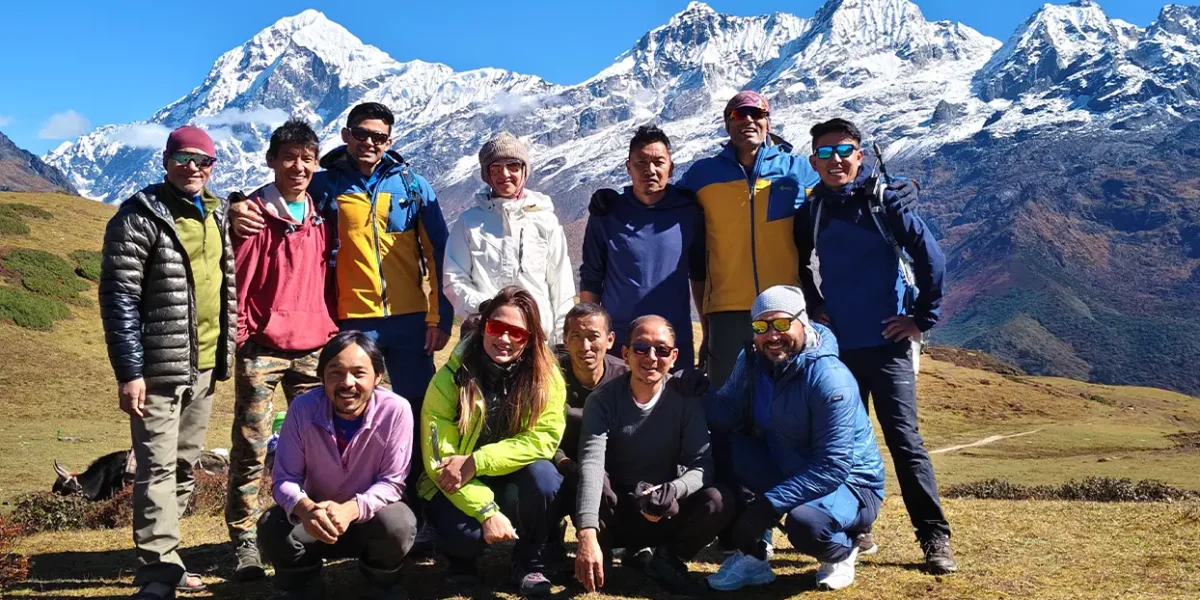
Sikkim does not have a bad view. It has a bad week. Get the timing wrong and the mountains disappear behind cloud for your entire trip. Get it right and you walk into the kind of sunrise that ends up on someone else’s travel blog.
The good news is that the season logic in Sikkim is the same no matter which trek or package you choose. High altitude, low altitude, a week-long expedition or a gentle few days of sightseeing, it all runs on the same calendar. This guide covers that calendar, month by month.
Quick Answer: Best Time to Trek in Sikkim
Autumn (late September to early December) gives the clearest, most reliable mountain views of the year. Spring (April to May) trades a little visibility for blooms, birdlife, and better odds of wildlife sightings. June to August is a hard no for any trek above 3,000 metres. Winter (December to February) works only for select lower-altitude routes with experienced guides.
| Season | Months | Good For | Skip It If |
|---|---|---|---|
| Spring | March to May | Rhododendrons, wildlife, birdlife | You want guaranteed clear peaks all day |
| Monsoon | June to August | Nothing above 3,000 m | You want to trek at all |
| Autumn | Late Sept to early Dec | Sharpest mountain views, photography | You want warmer nights above 4,000 m |
| Winter | Mid-Dec to Feb | Only select lower-altitude routes | You’re a first-time trekker |
Why Sikkim’s Weather Calendar Is Different
Most people bring their Western Himalaya assumptions to Sikkim and get caught out. The Eastern Himalayas sit much closer to the Bay of Bengal. That means far more moisture than the drier ranges of Himachal or Uttarakhand ever see. That extra humidity is why Sikkim’s forests are so dense and its rhododendron cover so spectacular. It’s also why the trekking calendar here is shorter and less forgiving. There is no long, dry stretch running from autumn into winter. You get two solid windows a year, and both close hard.
Spring in Sikkim: March to May
Spring opens the trekking season and it opens loudly. As the last of the winter snow melts off, rhododendrons, magnolias, and wild orchids take over the mid-altitude forests. Mornings are stable and good for walking. Afternoons build cloud, so don’t expect an all-day clear sky, and the odd spring shower is normal rather than a bad omen.
Lower camps generally sit between 18°C and 24°C by day. Above 4,000 metres, daytime temperatures fall to 12°C to 18°C, and nights routinely drop below freezing, down to around -10°C.
Spring is the season for anyone who cares more about the walk than the summit photo. It’s the best window in Sikkim for wildlife, including the elusive red panda, and birdwatchers treat it as unmissable. Mountain visibility is good, though not guaranteed. Afternoon haze occasionally softens the sharpest peaks.
The Monsoon Months: June to August
Skip these three months entirely for anything above 3,000 metres, and treat that as a rule rather than a suggestion. The southwest monsoon hits the Eastern Himalayas hard. Trails turn to slippery mud channels. Landslides regularly cut off road access to trailhead villages, and leeches take over the lower forests. Even if you got lucky with the trail conditions, thick cloud cover means you’d see nothing at the top anyway. That’s why almost every commercial trekking operator in Sikkim shuts down high-altitude operations from June through August.
If someone offers you a monsoon trekking package in Sikkim at a steep discount, that discount is the risk being passed on to you.
Autumn in Sikkim: Late September to Early December
This is the season serious trekkers build their year around. The monsoon’s departure scrubs the atmosphere clean of dust and haze. What’s left are crystal-clear skies that make the high peaks look close enough to touch.
It’s also noticeably colder than spring, and that cold arrives fast as you gain altitude. Lower elevations sit around 16°C to 21°C by day, dropping to 2°C to 10°C at night. Above 4,000 metres, daytime highs are just 2°C to 14°C, with nights falling to -8°C to -15°C.
One important local correction: avoid early September entirely. It’s still the heaviest rainfall month in this region, whatever generic travel blogs might tell you. The reliable autumn window really opens from late September onward and holds strong through November into early December.
Winter in Sikkim: December to February
Winter closes most high routes. Heavy snow makes the upper stretches of Sikkim’s highest passes impassable for standard commercial groups by mid-December, and they stay that way until spring.
There’s one exception worth knowing. Shorter treks that top out around 4,000 to 4,200 metres, rather than pushing on to a high pass, can often hold their season open a little later, sometimes into early December, since they never hit the extreme cold of the highest camps. If a route’s itinerary caps at that altitude, ask your operator whether an October or November slot is still viable even after the main high-pass season has closed.
Beyond that exception, winter trekking in Sikkim is strictly for well-equipped, experienced groups carrying genuine cold-weather gear. If you’re planning your first Himalayan trek, this is not the season to attempt it.
Trekking vs. Sightseeing: Two Different Calendars
Not every trip to Sikkim needs to involve a summit push. If your plans are low-altitude, temple visits, lakes, monasteries, and towns rather than mountain passes, the calendar opens up considerably. Most low-altitude sightseeing in Sikkim stays comfortable from October through May, including winter, when the high passes above are already snowed shut. The one stretch genuinely worth avoiding is July and August, when heavy monsoon rain increases the risk of landslides on the roads connecting these towns to the rest of the state, even if you never plan to touch a trekking trail.
For the high-altitude side, treks like the Dzongri Trek and the Goechala Trek follow the mountain calendar above, while a low-altitude option such as the Yuksom to Pelling Tour Package or the Zuluk Silk Route Tour Package can work through most of the year, monsoon aside.
A Quick Word on Permits and Timing
Whichever season you pick, build in a buffer day before your trip starts. Most high-altitude and border-area routes in Sikkim sit inside protected or restricted zones, which means Inner Line Permits, Protected Area Permits, and park or forest entry fees apply. Processing takes time, and requirements differ depending on whether you’re an Indian national or a foreign traveller. For the full process, timelines, and required documents, see our Sikkim permits guide.
Frequently Asked Questions
October and November offer the clearest skies and the most stable weather of the year, making them the single best months for high-altitude trekking in Sikkim.
No. Trails above 3,000 metres are unsafe and largely impassable from June to August due to landslides, mud, and zero visibility at the summits. Most agencies suspend high-altitude operations entirely during this window.
Autumn gives clearer, more reliable mountain views. Spring gives you blooms and better odds of spotting wildlife. Neither is objectively better, it depends on what you’re trekking for.
Only on select lower-altitude routes, and only for experienced trekkers with proper cold-weather gear. Routes that stay around 4,000 to 4,200 metres can sometimes hold their season into early December, but the highest passes are typically snowed shut from mid-December through February.
Anytime from October to May. Low-altitude sightseeing stays mild through winter, and the only real window to avoid is the peak monsoon stretch of July and August.
Yes. Permit requirements don’t change with the season. High-altitude and protected-area routes in Sikkim require the appropriate permits regardless of when you go.

Zeal Adventure
The articles on Zeal Adventures are written by a local Sikkim mountaineer, trek leader, and travel professional with extensive experience exploring the region. Drawing on first-hand knowledge, the team shares practical, accurate, and up-to-date information on trekking, adventure travel, sightseeing, local culture, permits, transportation, and trip planning across Sikkim. Every guide is created to help travellers make informed decisions and experience the Himalayas with confidence.
Related Articles
Sikkim Permits Guide: RAP, PAP & Entry Rules 2026
Planning a trip to Sikkim and confused about permits? You are not alone. Most…
Read More
How to Reach Yuksom, West Sikkim? A to Z guide
Yuksom sits at the end of the road, literally. It’s the last motorable point…
Read More