Dzongri Trek

Dzongri Trek
Duration 8 Days / 7 Nights
Location Yuksom West Sikkim
Group Size 2-10 People
Difficulty Medium
Starting From ₹18500 Per person

The Dzongri Trek is the shortest route in Sikkim that puts you face to face with Mount Kanchenjunga, our planet’s third-tallest peak, standing at 8,586 metres. The trail starts in Yuksom, the first capital of Sikkim, and climbs through the forests of Kanchenjunga National Park, an officially designated UNESCO World Heritage Site. In five days of walking, you rise from warm river valleys to open alpine meadows at over 4,000 metres.

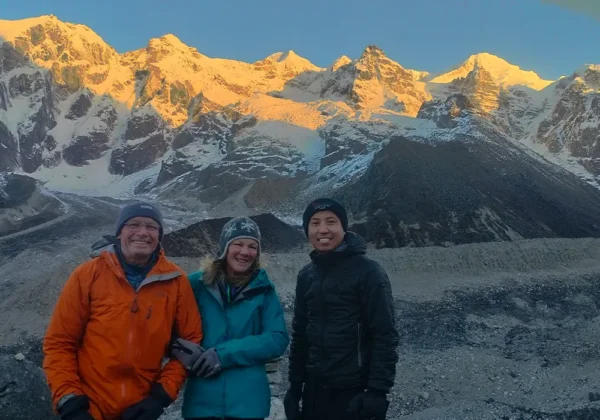
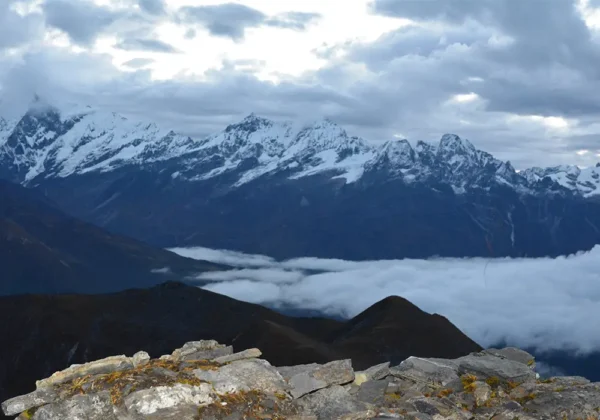
The reward comes on a cold morning at Dzongri Top. You stand at 4,200 metres and watch the first light turn Kanchenjunga, Pandim, Kabru, and Rathong gold, one peak after another. Few treks in India offer this much mountain for this little time.

Our 8-day package covers everything from pickup at NJP or Bagdogra to drop-off. We take a full rest day in Dzongri so your body can adjust well, and you can enjoy the high camp instead of rushing down.

For a detailed breakdown of the drive in from NJP or Bagdogra, see our guide on how to reach Yuksom.

Short on Time?

The trek can be shortened to 6 days. You walk from Yuksom to Tshoka in one long push, skip the rest day, and descend from Dzongri to Yuksom in a single day without breaking at Tshoka. We recommend this only for healthy trekkers who walk regularly and are used to high altitude. First timers should stick to the full itinerary, as the rest day at Dzongri protects you from altitude sickness.
Day-by-Day Itinerary

1 Day

NJP / Bagdogra to Yuksom (1,780 m)

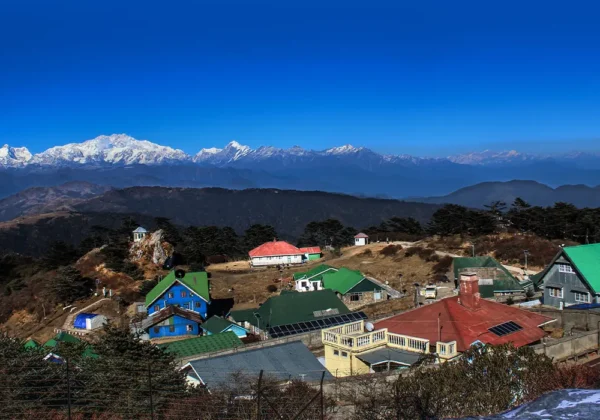
Our team picks you up from NJP railway station or Bagdogra airport. The drive to Yuksom covers about 150 km and takes six to seven hours. The road follows the Teesta and Rangit rivers, then climbs through cardamom farms and small villages of West Sikkim. In the evening, we verify your permits, check your gear, and brief you on the days ahead. Overnight in a hotel or homestay at Yuksom.

2 Day

Yuksom to Sachen (2,200 m)

The trek begins. Today you walk 8 km in five to six hours through dense forest of oak, alder, and ferns. The trail crosses three hanging bridges over the Pha Khola, Tshushay Khola, and Mentogang streams, high above the Rathong river gorge. The climb remains gentle, making this a good warm-up day. Sachen is a quiet forest clearing where we camp for the night.

3 Day

Sachen to Tshoka (3,000 m)

A shorter but steeper day of about 9 km. The trail drops to the Prek Chu river, crosses a bridge, then climbs hard to Bakhim at 2,620 metres. Catch your breath at the tea hut here, because the view back down the valley is worth it. Another hour of zigzag climbing through rhododendron trees brings you to Tshoka, a small settlement founded by Tibetan families. You get your first clear view of Mount Pandim, and there is a small monastery beside a pond. Overnight in tents or a trekkers hut.

4 Day

Tshoka to Dzongri (4,030 m)

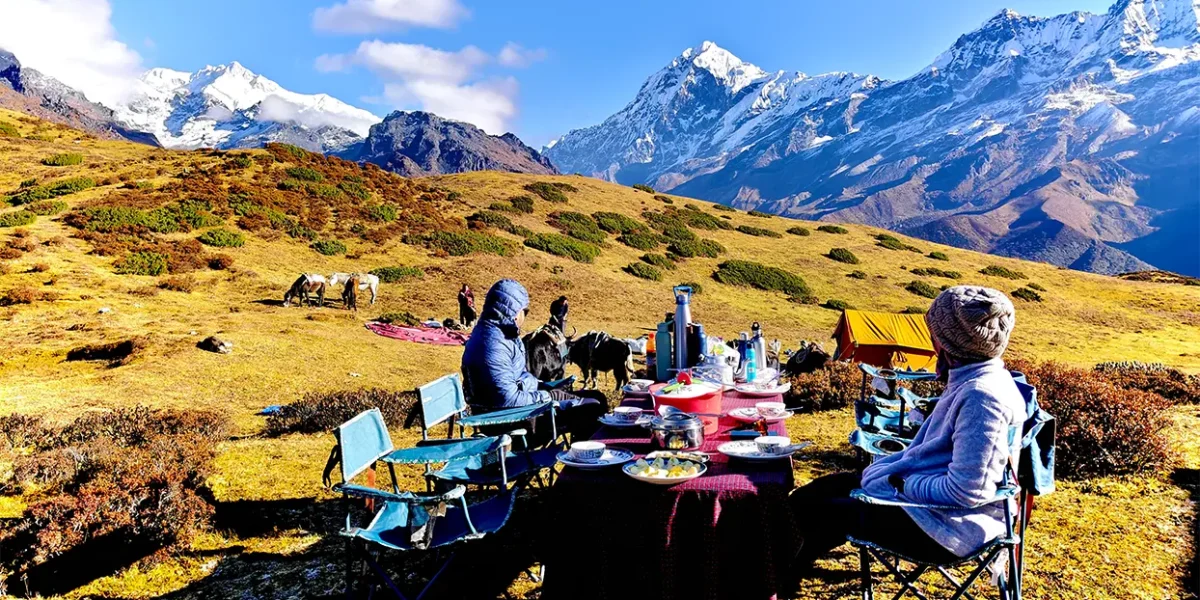
This is the hardest day of the trek. You gain over 1,000 metres in about 12 km. The trail climbs on wooden logs through thick rhododendron forest to Phedang at 3,600 metres, where we stop for a hot lunch. Above Phedang the trees thin out and the ridge opens up. Walk slow, drink water often, and let the guide set the pace. By late afternoon you reach the wide, windswept meadows of Dzongri. Nights here are cold, so layer up early.

5 Day

Dzongri Top (4,200 m) Sunrise and Rest Day at Dzongri

We wake at 3:30 am and climb for about an hour by headlamp to Dzongri Top. Then the show begins. Kanchenjunga at 8,586 metres catches the first light, followed by Pandim at 6,691 metres, Kabru North at 7,338 metres, Kabru South at 7,317 metres, Rathong at 6,678 metres, Koktang, Simvo, and Frey Peak. After sunrise, we return to camp for a hot breakfast.

The rest of the day is yours. Rest at camp, walk the meadows, or join an optional hike to Laxmi Pokhari, a glacial lake set in a rock bowl at 4,200 metres. This rest day is deliberate. It lets your body recover from the big climb and makes the descent safer and far more enjoyable.

6 Day

Dzongri to Tshoka (3,000 m)

A relaxed descent of about 12 km back through Phedang and the rhododendron belt. Trekking poles are the best companion on the steep wooden steps. You reach Tshoka by early afternoon with time to rest, dry your gear, and enjoy a warm meal.

7 Day

Tshoka to Yuksom (1,780 m)

The final day of walking covers about 17 km. The trail drops past Bakhim and Sachen, crosses the hanging bridges again, and ends at Yuksom by late afternoon. Celebrate with the crew over dinner. Overnight at Yuksom.

8 Day

Yuksom to NJP / Bagdogra

After breakfast, we drive back to NJP or Bagdogra. You reach by evening. The trip ends here with a bag full of photos and legs that earned them.

What's Included

  • Accommodation on twin sharing (hotel at Yuksom, alpine tents on trek)
  • All meals from Day 1 dinner to Day 8 breakfast
  • NJP / Bagdogra to Yuksom transfers and return by shared vehicle
  • Kanchenjunga National Park permits and entry fees for Indian nationals
  • Experienced local guide, cook, and support staff
  • Yaks or porters for common camping load
  • Tents, sleeping bags, mats, kitchen and dining tents
  • First aid kit with portable oxygen

What's Excluded

  • Airfare and train fare
  • Lunch on drive days (Day 1 and Day 8)
  • Personal porter or mule for your backpack
  • Gear rental such as jackets, poles, and boots
  • Travel insurance
  • Extra permit charges for foreign nationals
  • Personal expenses and tips
  • 5% GST
  • Anything not listed under inclusions

Tour Location

No reviews yet. Be the first to share your experience after travelling with us!

Share Your Experience

Completed this tour or trek with us? We would love to hear about your journey.

Not shown publicly

Rate Your Experience

Overall Experience *
Service Quality
Guide & Team
Value for Money

Frequently Asked Questions

It is a moderate to challenging trek. The trail is well marked, but the climb from Tshoka to Dzongri gains over 1,000 metres in one day. You should be able to walk five to six hours daily. Two to three months of regular walking, jogging, or stair climbing is good preparation.

March to May and mid-September to November. Spring brings rhododendron blooms across the trail. Autumn gives the clearest views of Kanchenjunga. Avoid the monsoon months of June to early September due to landslides and leeches, and deep winter when heavy snow blocks the upper trail.

Yes. The trek runs through Kanchenjunga National Park, so every trekker needs a permit. Indian nationals need a valid photo ID such as a Voter ID, Driving Licence, or Passport, plus passport size photos. Aadhaar is not accepted. Foreign nationals need an Inner Line Permit plus a trekking permit, must trek in a group of at least two, and must have a registered guide. We arrange all permits for you.

Dzongri Top stands at 4,200 metres. The Dzongri campsite sits slightly lower at about 4,030 metres.

Anyone can feel the altitude above 3,000 metres. Common signs are headache, poor sleep, and low appetite. Our itinerary keeps a full rest day at Dzongri, our guides carry portable oxygen, and we pace the climb carefully. Drink plenty of water, walk slowly, and tell your guide at the first sign of any symptom.

Yuksom is the last place with reliable network. Tshoka gets a weak signal in clear weather. Beyond Phedang there is no network and no electricity, so inform your family in advance and carry a power bank.

Yes. Fit trekkers with prior high altitude experience can finish in 6 days by walking Yuksom to Tshoka in one day and descending from Dzongri to Yuksom in one day. We do not recommend this for first timers.