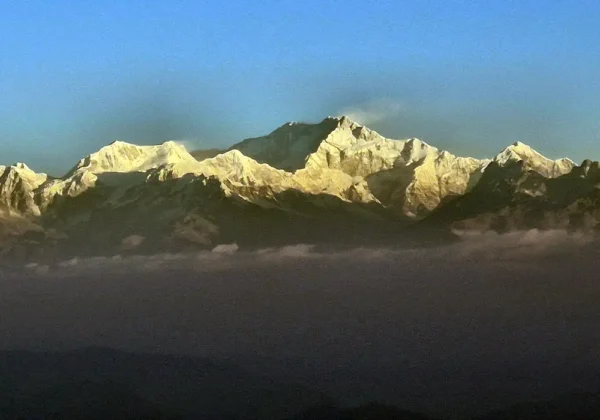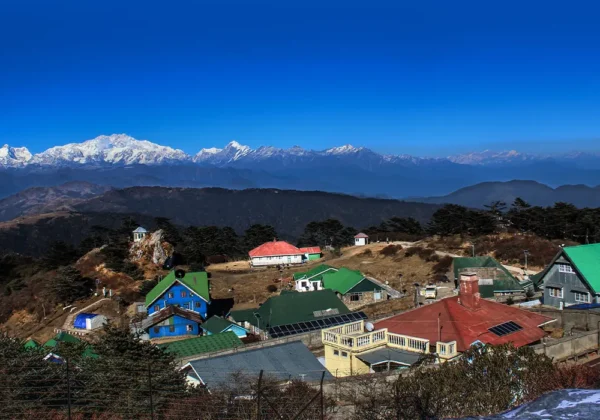
Darjeeling is the hill station where the Himalayas hand you your first cup of tea. Perched at roughly 2,042 metres in the Lesser Himalayas of West Bengal, right where India brushes against Nepal, Bhutan, and Sikkim, this former colonial sanatorium has spent two centuries balancing steep ridgelines, misty tea gardens, and a toy train that somehow still climbs the mountain a Victorian engineer laid tracks up in 1881.
The name itself carries the story: Dorje-ling, “Land of the Thunderbolt,” after a Buddhist monastery that once stood where the town’s Mahakal Temple now shares its sanctum between Hindu priests and Buddhist monks. Before the British arrived in 1835, this land belonged to the Chogyals of Sikkim, ceded piece by piece through Gorkha invasions and colonial treaties, a history still visible in the Lepcha, Bhutia, and Nepali communities who call these hills home.
What earns Darjeeling its fame is rare in combination: tea so distinctive it holds India’s first Geographical Indication tag and the nickname “Champagne of Teas,” a UNESCO World Heritage steam railway looping through Batasia to reveal Kanchenjunga on a clear morning, and a wilderness edge at Singalila National Park where red pandas still climb moss-covered branches. Where Sikkim next door pulls trekkers deeper into high-altitude monastery trails and untouched wilderness, Darjeeling offers that same Himalayan drama with colonial-era comfort layered on top, Gothic churches, century-old bakeries, and heritage hotels included.
Visit in spring (late March to June) for rhododendrons and the coveted first-flush tea harvest, or in autumn (mid-November to December) for the clearest Kanchenjunga views of the year. Skip the monsoon. Everything else, come see for yourself.