Kasturi Orar Round Trek

Kasturi Orar Round Trek
Duration 12 Days / 11 Nights
Location Yuksom West Sikkim
Group Size 2-10
Difficulty Hard
Starting From ₹30,000 Per person

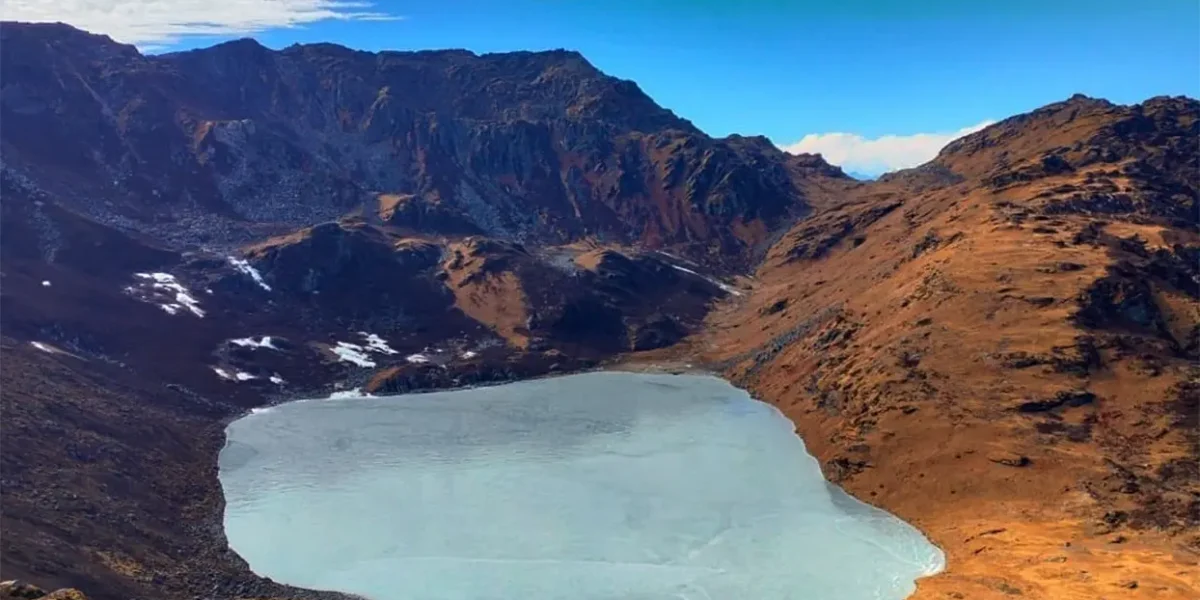
The Kasturi Orar Round Trek is one of the toughest and most rewarding treks in the Sikkim Himalayas. Most trekkers know the classic Goecha La trek, where you walk in and walk right back out the same way. The Kasturi Orar Trek does something different. After the summit push to Goecha La Viewpoint, the trail breaks away from the crowd and loops east over the Kasturi La pass, past the hidden Lampokhari Lake, and down through untouched forest to the Gurung village of Labdang. You never retrace your steps.

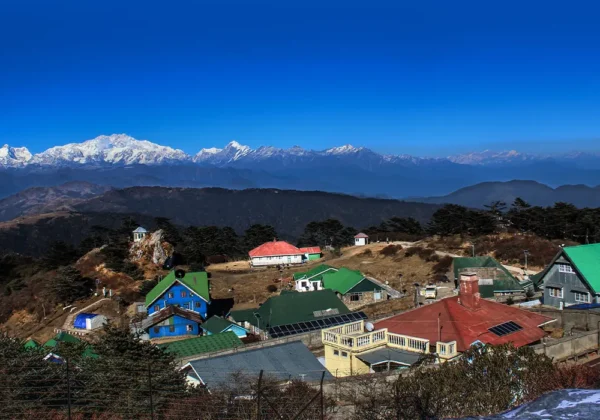
Over 12 days and roughly 120 kilometres, this trek carries you from the sub-tropical forests of Yuksom at 1,780 metres to the high alpine world of Goecha La Viewpoint at 4,600 metres. Along the way, you get a direct, unobstructed view of Mount Kanchenjunga’s eastern face, the third-highest mountain on Earth. Few treks in India offer this kind of scale in a single itinerary: dense jungle, blooming rhododendron forest, glacial lakes, high passes, and a warm village homestay to close it out.

The Kasturi Orar Trek falls entirely within the Khangchendzonga National Park, a UNESCO World Heritage site and one of the last strongholds of the snow leopard, red panda, and Himalayan blue sheep in Sikkim. Community guardians called Himal Rakshaks help protect this landscape, and every trekker who walks this route supports that work directly.

Why Choose the Kasturi Orar Round Trek

  • A true circuit route with new scenery every single day, unlike the standard Goecha La out-and-back
  • Face-to-face views of Kanchenjunga, Pandim, Kabru, and Talung from Goecha La Viewpoint and Dzongri Top
  • A visit to the secluded Lampokhari Lake, rarely seen by regular Goecha La groups
  • A crossing of Kasturi La Pass at 4,500 metres, the trek’s final high-altitude test
  • A homestay night in Labdang, a traditional Gurung heritage village, after days of camping
  • Full acclimatization days built into the schedule to protect against altitude sickness

Best Time for the Kasturi Orar Trek

This trek runs in two windows only. Spring, from March to mid-June, brings warmer days between 10°C and 18°C and the Himalayas’ famous rhododendron bloom, though afternoon cloud can roll in and hide the peaks by late day. Autumn, from September to November, offers the clearest skies of the year and the sharpest views of Kanchenjunga, though nights turn cold fast, dropping to -8°C by November. The monsoon months of July and August are avoided entirely due to leeches, landslides, and flooded river crossings, and winter treks are not possible once heavy snow closes the high passes.

See our guide to the best time to trek in Sikkim for how this fits into the wider seasonal picture across our routes.

Difficulty and Fitness

This is a difficult, strenuous trek and not a beginner’s route. You will sleep above 4,000 metres for close to five nights in a row, and the climb from Tshoka to Dzongri alone gains over 1,000 metres in a single day. We recommend at least two months of cardio training before you arrive, including running, stair climbs with a loaded pack, and leg strength work. Trekkers above 45 years need a medical fitness certificate before we can process your permit.

This trek falls inside the Khangchendzonga National Park permit zone, so the same rules covered in our comprehensive Sikkim permits guide apply here.
Day-by-Day Itinerary

1 Day

Drive to Yuksom (1,780m)

Your journey starts with a scenic drive from Bagdogra Airport or New Jalpaiguri Railway Station to Yuksom, taking around 6 to 7 hours through Jorethang and Legship. Yuksom was the first capital of Sikkim, crowned in 1642, and you can visit the Norbugang Coronation Throne, Kathok Lake, and Dubdi Monastery before settling in for the night. This is also where we complete your permit formalities.

2 Day

Yuksom to Sachen (2,195m)

The trek begins with a gentle climb through thick sub-tropical forest along the Rathong River, crossing several suspension bridges over rushing mountain streams. Expect oak, magnolia, and giant fern cover overhead, plus a good chance of spotting colourful birds and butterflies along the way.

3 Day

Sachen to Tshoka (3,000m)

Today includes a steep climb of nearly six kilometres up switchbacks to Bakhim, followed by a further push through rhododendron forest into Tshoka, a historic Tibetan settlement. This is where you get your first open mountain views, including Pandim, Tinchenkhang, and Jopuno.

4 Day

Tshoka to Dzongri (4,030m)

The hardest single day so far. The trail climbs through a rhododendron tunnel to Phedang, then continues over Deorali Top before dropping into the wide alpine meadows of Dzongri. You cross 4,000 metres today, so pace, hydration, and rest matter more than speed.

5 Day

Acclimatization Day at Dzongri and Dzongri Top

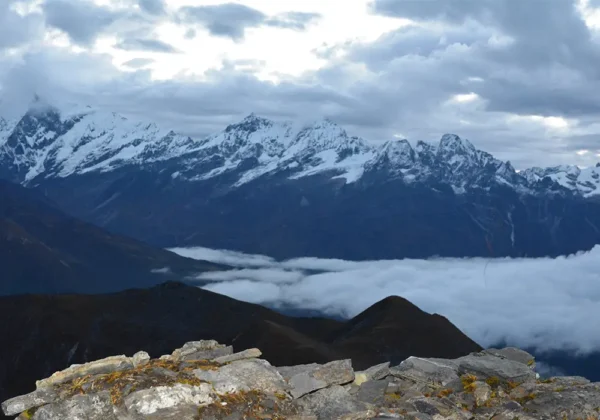
A full rest day to let your body adjust to the altitude. Most groups leave camp before dawn to climb Dzongri Top (4,170m) for sunrise, one of the finest mountain panoramas in the Himalayas, with Kanchenjunga, Kabru, Pandim, and the Singalila Ridge all visible at once.

6 Day

Dzongri to Thangsing (3,930m)

The trail descends through forest to Kokchurung, crosses the Prek Chu river, and climbs steadily back up through fir and boulder-strewn terrain into the open pastures of Thangsing, sitting directly beneath Mount Pandim.

7 Day

Thangsing to Lamuney (4,130m) and Samiti Lake

A short, easy walk to Lamuney across high pastures, followed by an afternoon side hike up to Samiti Lake at 4,200 metres, a striking blue glacial lake that mirrors Kanchenjunga and Pandim on a clear day. An early dinner and early sleep tonight, since tomorrow starts before sunrise.

8 Day

Summit Push to Goecha La Viewpoint, Return to Thangsing

Wake-up is between 1:00 AM and 2:30 AM for the walk to Goecha La Viewpoint (4,600m) by headlamp, timed to arrive right as the sun lights up Kanchenjunga's eastern wall. After sunrise, the group descends back through Lamuney to camp at Thangsing for the night.

9 Day

Thangsing to Chamrea via Lampokhari Lake (4,230m)

This is where the Kasturi Orar route splits from the standard Goecha La trail. Instead of heading back the way you came, the trail climbs east into quiet, untouched terrain, passing the remote Lampokhari Lake before reaching camp at Chamrea.

10 Day

Chamrea to Kasturi Orar via Kasturi La (4,500m)

A tough climb to Kasturi La, the trek's final high pass, with sweeping last views of Kanchenjunga and Pandim from the top. From here the trail drops fast, and the landscape flips from bare alpine rock back into thick, green forest by the time you reach the Kasturi Orar campsite (3,500m).

11 Day

Kasturi Orar to Labdang

A long descent of roughly 1,500 metres through dense, moss-covered forest, eventually opening onto the terraced fields of Labdang, a traditional Gurung village. Tonight you swap your tent for a homestay, with home-cooked Sikkimese food and a proper hot bath waiting.

12 Day

Labdang to Tashiding, Departure

A short, easy walk down to Tashiding, home to one of Sikkim's most sacred monasteries. From here, private vehicles take you back to Siliguri, NJP, or Bagdogra, a drive of about 6 to 7 hours, closing out the Kasturi Orar Round Trek.

What's Included

  • Forest Department Entry Permit and KNP Permit processing
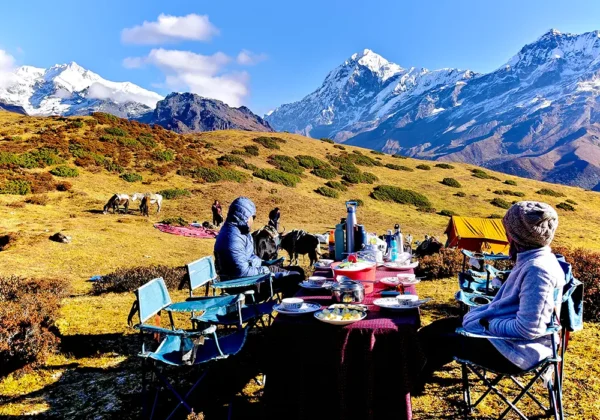
  • All camping equipment: dome tents, sleeping mats, dining tent, and toilet tent
  • All meals during the trek (breakfast, packed lunch, dinner, and hot beverages)
  • Experienced trek leader, guide, and cooking staff
  • Mules or porters for camping gear, food rations, and up to 14 kg of personal luggage per trekker
  • Basic first aid kit and pulse oximeter monitoring at altitude
  • Local transfers between Yuksom and Tashiding as per the itinerary

What's Excluded

  • Transport to and from Bagdogra Airport or NJP Railway Station (can be arranged on request)
  • Personal trekking gear (boots, jackets, sleeping bag, trekking poles)
  • Travel and medical insurance
  • Medical fitness certificate for trekkers above 45 years
  • Foreign national permit fees (Inner Line Permit and Protected Area Permit)
  • Tips for guides, cooks, and porters
  • Any personal expenses, snacks, or bottled water bought en route
  • Costs arising from early descent, delays, or itinerary changes due to weather or health

No reviews yet. Be the first to share your experience after travelling with us!

Share Your Experience

Completed this tour or trek with us? We would love to hear about your journey.

Not shown publicly

Rate Your Experience

Overall Experience *
Service Quality
Guide & Team
Value for Money

Frequently Asked Questions

It is rated difficult to strenuous. You gain over 1,000 metres of altitude on Day 4 alone and spend close to five nights above 4,000 metres. Good cardio fitness and prior trekking experience are strongly recommended.

Spring (March to mid-June) and autumn (September to November) are the only reliable windows. Autumn gives the clearest mountain views, while spring brings the rhododendron bloom.

The standard Goecha La trek is a there-and-back route. The Kasturi Orar Trek follows the same path up to Goecha La Viewpoint, then loops east over Kasturi La pass and down through Lampokhari Lake and Labdang village instead of returning the way you came.

Yes. All trekkers need a Forest Department Entry Permit and a KNP Permit, arranged through your operator. Foreign nationals additionally need an Inner Line Permit and a Protected Area Permit.

No. Sikkim state regulations require every trekker inside Khangchendzonga National Park to be part of a group led by a licensed operator with registered guides.

Goecha La Viewpoint 1, at 4,600 metres, is the highest point trekkers can reach. The actual Goecha La pass at 4,940 metres has been closed to trekking groups since 2017 to protect snow leopard habitat.

The itinerary includes a full acclimatization day at Dzongri and a gradual altitude gain over the first several days. Drink plenty of water, walk at a slow pace, and tell your guide immediately if you notice headaches, nausea, or dizziness.

We keep groups between 2 and 10 trekkers, which allows our guides to manage pace and safety properly at high altitude.

Trekkers above 45 years need a medical fitness certificate signed by a physician before we can begin the permit process.

Permits, camping equipment, all meals during the trek, guide and cooking staff, and porter or mule support for your gear and up to 14 kg of personal luggage. Transport to Yuksom, personal gear, and insurance are not included.